The first generation of animatronic dinosaurs ran on pre-programmed loops. You walked up, you watched a sequence play out, and you moved on. It was impressive, but the dinosaur did not know you were there. Today's interactive animatronic dinosaurs are different. They can see you, react to you, and respond to your actions — turning passive viewing into active engagement.
Interactive dinosaur technology has advanced rapidly in recent years. What was once reserved for high-budget theme park attractions is now available for museums, zoos, and even mid-size attractions. The result is dramatically better visitor engagement, longer dwell times, and a more memorable experience.
Sensor Technology: How Dinosaurs "See" Visitors
Interactive dinosaurs use a variety of sensor technologies to detect and respond to visitors:
Infrared (IR) Motion Sensors
The most common sensor type in animatronic dinosaurs. IR sensors emit infrared light and detect when it is reflected back by a moving object — a person walking past. When triggered, the dinosaur starts its active sequence. IR sensors are reliable, affordable, and work both indoors and outdoors.
Range is typically adjustable from 1-10 meters. The sensor is usually mounted in the dinosaur's chest or head area, angled forward toward the viewing area. A sensor delay prevents the dinosaur from re-triggering immediately after finishing a sequence.
Microwave / Radar Motion Sensors
Similar to IR sensors but using microwave radar instead of infrared light. Microwave sensors can penetrate thin materials (like the dinosaur's skin) so they can be mounted internally, and they are less affected by ambient conditions like fog, dust, or direct sunlight.
Microwave sensors are particularly good for outdoor installations where weather conditions might interfere with IR sensor reliability. They also detect motion through glass, which is useful for exhibits behind barriers.
Touch Sensors
For interactive exhibits where visitors are allowed to touch the dinosaur (usually designated touch points), pressure-sensitive touch sensors trigger a response — a roar, a head turn, a tail flick. Touch-sensitive dinosaurs are incredibly popular with children and create very high engagement.
Touch sensors are typically placed on specific body parts designed for interaction — a snout you can pet, a scale you can press, a horn you can touch. The rest of the dinosaur is off-limits, protecting both the visitor and the dinosaur.
Pressure Plates / Floor Sensors
Pressure-sensitive plates in the floor trigger the dinosaur when someone steps on them. This is great for choreographed scares and surprises — the visitor walks to a specific spot and the dinosaur reacts directly to their position.
Floor sensors are commonly used in walk-through dinosaur trails, haunted houses, and immersive theater experiences where you want precise control over when and how the dinosaur reacts.
Sound / Clap Sensors
Some interactive dinosaurs respond to sound — clap your hands or make noise and the dinosaur roars back. This is a fun, playful interaction that works especially well for children's exhibits and family entertainment.
Camera-Based AI Recognition
The latest interactive technology uses cameras and AI to recognize visitor actions and respond accordingly. For example, the dinosaur could follow visitors with its eyes and head, respond differently to children vs. adults, or react to specific gestures. This is currently at the premium end but is becoming more accessible every year.
Types of Interactive Behavior
Interactive behavior ranges from simple trigger-response to complex multi-state programming:
Level 1: Triggered Sequences
The dinosaur runs a pre-programmed sequence when a sensor detects a visitor. This is the most common and most reliable form of interaction. The dinosaur does not truly "react" differently based on what the visitor does — it just knows when someone is there and performs its routine.
Level 2: Multiple Response Patterns
The dinosaur has several different behavior sequences and chooses which one to play based on time of day, how many people are present, or random selection. This prevents the experience from feeling repetitive for repeat visitors.
Level 3: Interactive Feedback Loops
The dinosaur responds to visitor actions in real time. Touch the snout and it pulls back and snorts. Make a loud noise and it roars back. Step on a pressure plate and it turns to face you. This creates the illusion that you are interacting with a real animal.
Level 4: Guided Narrative Experiences
The dinosaur is part of a scripted narrative experience with multiple stages. This might involve a narrator voice guiding visitors through the experience while the dinosaur responds at key moments, or a multi-dinosaur choreographed scene triggered by visitor progress through the exhibit.
Level 5: AI-Powered Interaction
The most advanced systems use AI to analyze visitor behavior and respond dynamically. The dinosaur might follow specific visitors with its gaze, react differently to groups vs. individuals, or even "learn" which behaviors get the best responses and adjust accordingly.
AR and Digital Integration
The most cutting-edge dinosaur exhibits combine physical animatronics with digital technology for a blended reality experience:
- AR overlays: Visitors point their phones (or use provided tablets) at the dinosaur and see additional information — skeleton overlays, fact bubbles, animation showing how the dinosaur moved, etc.
- Projection mapping: Images projected onto the dinosaur itself can show muscle structure, circulatory system, or damage/wound effects for educational purposes.
- Companion app: A mobile app that syncs with the dinosaur exhibit, providing additional information, interactive challenges, and behind-the-scenes content.
- Gamification: Visitors collect digital dinosaur facts, complete scavenger hunts, or participate in interactive games that use the physical dinosaurs as anchors.
The beauty of combining physical animatronics with digital technology is that you get the best of both worlds — the tangible, visceral presence of a real physical dinosaur, plus the information depth and interactive potential of digital technology.
Engagement Impact: Interactive vs. Passive
How much difference does interactivity make? The data is compelling:
- Interactive exhibits average 2-3x longer visitor dwell time than passive displays
- Visitor satisfaction scores are consistently 20-40% higher for interactive exhibits
- Social media sharing is significantly higher — people share videos of their interaction far more often than photos of static displays
- Educational retention improves when visitors actively participate rather than passively observe
- Repeat visitation increases — people come back to experience the interactive element again, especially with multi-pattern behavior
For attractions where maximizing engagement is the goal, the additional investment in interactive features is almost always justified by the results.
Choosing the Right Level of Interactivity
More interactivity is not always better. The right level depends on your specific situation:
- High-traffic walk-by locations: Simple triggered sequences (Level 1) are often best. The dinosaur activates as people walk past, they watch for 10-30 seconds, and they move on. This works well for hallways, mall center courts, and zoo trails.
- Destination exhibits: If visitors have traveled specifically to see the dinosaurs, give them more interaction. Levels 2-3 work best for dedicated dinosaur exhibits, theme park attractions, and science centers.
- Premium / ticketed attractions: For ticketed experiences where visitors pay specifically for the dinosaur encounter, invest in the highest level of interactivity you can afford. Levels 4-5 create unforgettable experiences that justify premium ticket pricing.
- Educational settings: Museums and science centers benefit from guided narrative interaction (Level 4) that supports learning objectives rather than pure entertainment.
Maintenance Considerations for Interactive Dinosaurs
Interactive dinosaurs have a few additional maintenance considerations compared to standard models:
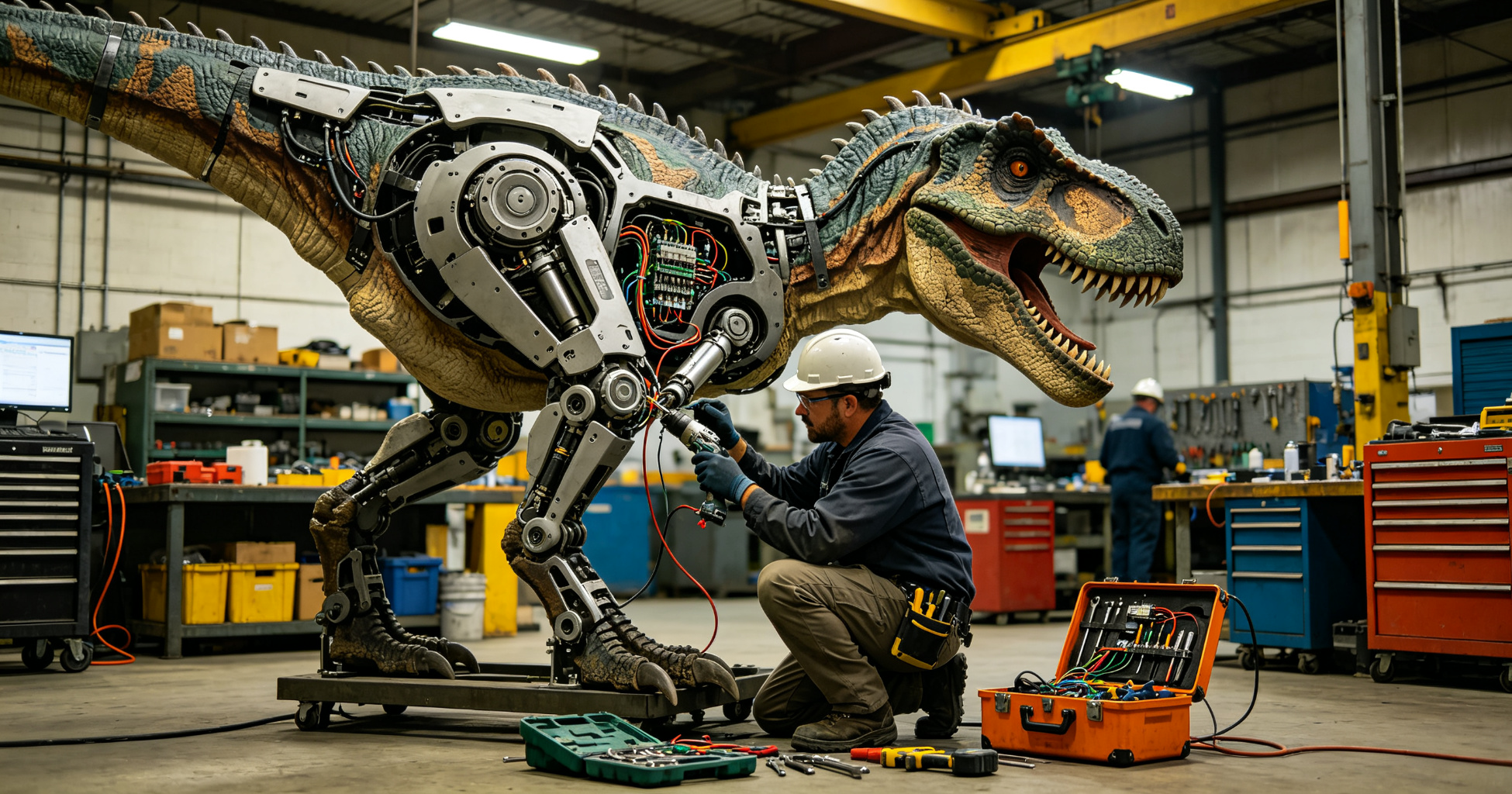
- Sensor calibration: Sensors need periodic recalibration to maintain proper trigger range and sensitivity.
- Sensor cleaning: Dust, dirt, and water spots on sensor lenses can cause false triggers or failure to trigger. Clean sensor lenses regularly.
- Touch point wear: Touch sensors in high-traffic areas experience more wear and tear. Plan for periodic replacement of touch pads and pressure sensors.
- Software updates: More complex interactive systems may benefit from occasional software updates to add behaviors or fix bugs.
- More testing: With more components comes more potential failure points. Budget slightly more time for regular testing and maintenance.