Outdoor installation puts animatronic dinosaurs through their toughest endurance test. Rain, sun, snow, humidity, salt air, temperature swings, and biological growth all conspire to degrade materials, seize mechanisms, and shorten lifespan. A dinosaur that might last 15 years in a climate-controlled museum could fail in as little as 3-5 years outdoors without proper protection and maintenance.
The good news is that with proper weatherproofing at installation and disciplined ongoing maintenance, an outdoor animatronic dinosaur can easily last 8-12 years — and well-maintained SAGE units have been known to operate for 15+ years even in harsh outdoor conditions.
Built-In Weather Protection: What Quality Dinosaurs Include
All SAGE animatronic dinosaurs are designed for outdoor use, but the level of protection varies by model and options. Look for these standard and optional weather protection features:
- IP65-rated electrical components: All junction boxes, motor controllers, and sensors should carry an IP65 rating or higher, meaning they are dust-tight and protected against water jets from any direction.
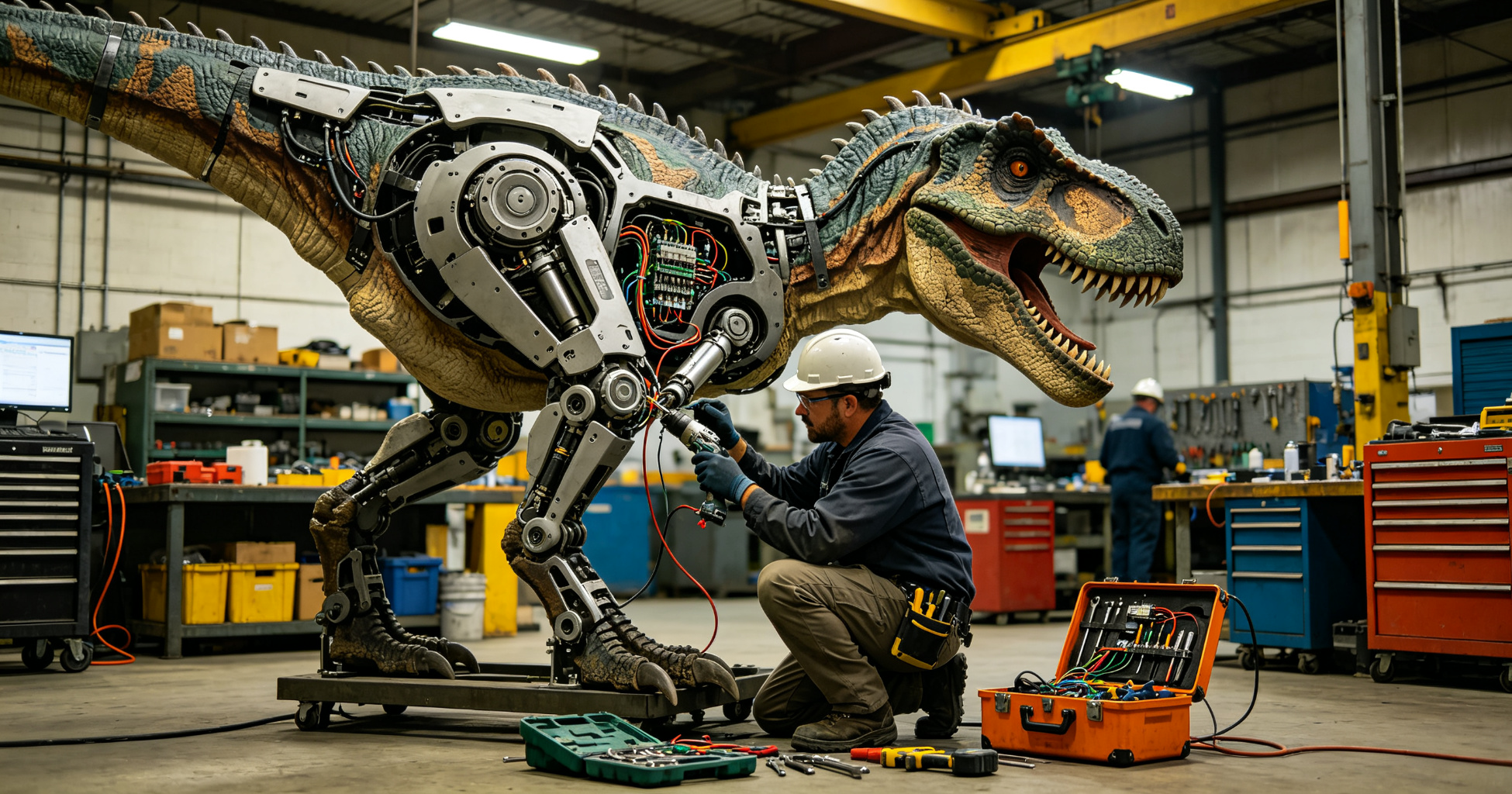
- Marine-grade steel frame with anti-rust treatment: The internal steel frame should be sandblasted, primed with epoxy zinc-rich primer, and coated with marine-grade paint before foam and skin are applied.
- UV-stabilized silicone skin: The silicone formulation should include UV inhibitors to prevent fading, cracking, and degradation from sunlight exposure.
- Drainage channels: Body design should incorporate internal drainage channels so any water that does get in can drain out rather than pooling inside.
- Breathing membrane vents: Quality dinosaurs use Gore-Tex style membrane vents that allow air exchange (preventing condensation) while blocking liquid water.
- Optional cold-climate package: For installations in regions that experience freezing temperatures, a cold-climate upgrade includes heating elements, freeze-protection valves, and low-temperature-rated lubricants.
- Optional coastal package: For beach or oceanfront installations, a coastal upgrade adds additional anti-corrosion treatments and salt-resistant coatings.
Installation Weatherproofing: Steps to Protect Your Investment
How you install the dinosaur has a huge impact on how it weathers. Follow these best practices:
- Elevate the base: Never set the dinosaur's base directly on the ground or in a low spot where water can pool. Use a raised concrete plinth, steel platform, or landscaped rock mound to ensure drainage away from the base.
- Provide overhead cover if possible: A simple canopy, rock overhang, or shade structure reduces UV exposure by 70-90% and keeps rain off the most vulnerable upper surfaces. This single step can double the dinosaur's skin life expectancy.
- Seal all penetrations: Anywhere wires, pipes, or bolts pass through the outer skin should be sealed with silicone sealant. Re-inspect and re-seal annually.
- Apply anti-graffiti clear coat: For high-traffic public areas, apply a clear anti-graffiti coating to the skin that allows easy removal of spray paint and stickers without damaging the underlying paint.
- Install surge protection: Outdoor installations are vulnerable to lightning strikes and power surges. Always install a surge protector on the power line.
Seasonal Maintenance Calendar
Spring (After Winter Storage)
- Uncover the dinosaur and inspect for winter damage — rodent activity, water intrusion, frost cracks.
- Wash thoroughly with mild soap and a soft brush.
- Inspect skin for cracks, tears, or delamination. Repair any damage immediately.
- Lubricate all chains, bearings, and pivot points — winter cold hardens old lubricant.
- Test all electrical systems; check for moisture in junction boxes.
- Run a full test cycle for at least 30 minutes before opening to the public.
Summer (Peak Operating Season)
- Weekly visual inspection — look for fraying, fading, loose parts.
- Wash skin monthly to remove dust, pollen, and bird droppings.
- Check motor temperatures during the hottest days — overheating shortens motor life dramatically.
- Inspect air filters and ventilation fans; clean or replace if clogged.
- Watch for signs of biological growth (mold, algae) on shaded or damp areas and clean promptly.
- Apply UV protectant spray quarterly to skin surfaces to slow fading.
Fall (Preparing for Winter)
- Complete a full mechanical inspection and service before cold weather arrives.
- Drain all water lines and spray systems; add antifreeze if applicable.
- Lubricate all moving parts with cold-temperature-rated grease.
- Apply a conditioning treatment to silicone skin to prevent winter brittleness.
- Seal any new cracks or tears before winter — water that freezes in a small crack can expand and create much larger damage.
Winter Storage Options
In climates with severe winters, you have three options:
- Indoor storage (best): If space is available, moving the dinosaur indoors for winter dramatically extends its life. This is the gold standard for preservation.
- Weatherproof tarp cover (good): Cover with a breathable, UV-resistant tarp designed for outdoor equipment. Never use plastic — it traps condensation and causes more damage than it prevents.
- Year-round operation (acceptable with maintenance): SAGE dinosaurs rated for -20°C can operate through winter, but plan for increased maintenance frequency and monitor closely during extreme cold snaps.
Common Outdoor Problems and How to Fix Them
- Faded skin color: Sun fading is normal over time. Minor fading can be addressed with touch-up paint and UV protectant. Severe fading requires professional repainting, typically every 5-7 years for unprotected outdoor installations.
- Skin tears and cracks: Small tears can be repaired with silicone adhesive and color-matched paint. Large tears or extensive cracking may require factory service or partial reskinning.
- Rust on visible metal parts: Surface rust on steel components should be sanded and repainted immediately to prevent spread. Internal rust on the frame is much harder to address — proper rust-proofing at purchase and annual inspection are critical.
- Motor performance degradation: If movements slow down or become jerky, it usually indicates either a motor failing from water intrusion or lubricant that has broken down. Diagnose and repair promptly — running a failing motor can damage the control system.
- Water in the control box: If water gets into the control cabinet, do NOT power on the unit. Disconnect power, dry thoroughly, and have a qualified technician inspect all components before re-energizing.